
.jpg)
Markham Pedestrian Accident Lawyers
Pedestrian accidents in Markham can cause life-changing injuries in a matter of seconds. A person walking through an intersection, crossing a plaza, entering a parking lot, or walking along a busy road can be struck by a vehicle and left dealing with fractures, brain injuries, chronic pain, time away from work, and uncertainty about what insurance benefits or legal claims are can be accessed.
At Foster Injury Law, we represent pedestrians injured in motor vehicle accidents in Markham and throughout Ontario. These cases often require thorough investigations because the driver, insurer, or defence lawyer may try to blame the pedestrian for crossing at the wrong time, wearing dark clothing, walking outside of a crosswalk, or failing to see the vehicle.
Drivers in Ontario have legal obligations to watch for pedestrians, yield, drive at a safe speed, and keep proper lookout, especially in areas where people are expected to be walking.
If you were hit by a car, SUV, truck, delivery vehicle, rideshare vehicle, or commercial vehicle in Markham, you may be entitled to claim accident benefits through Ontario’s no-fault insurance system and, in serious cases, bring a lawsuit against the at-fault driver.
Markham Pedestrian Accident Lawyers for Serious Injury Claims
Pedestrian accident cases are usually more serious than ordinary vehicle collision claims because the injured person has little or no physical protection. Even low-speed impacts can cause major injuries, particularly if a pedestrian is thrown to the pavement, struck by a larger vehicle, or hit near an intersection.
We help injured pedestrians and their families with claims involving:
Traumatic brain injuries and concussions
Skull fractures and facial injuries
Broken legs, ankles, hips, arms, wrists, and shoulders
Pelvic fractures
Spinal injuries
Soft tissue injuries and chronic pain
Psychological trauma, anxiety, depression, and PTSD
Scarring and disfigurement
Catastrophic impairment claims
Fatal pedestrian accidents
The obvious injury is not always the only injury that matters. A pedestrian may initially be focused on broken bones, surgery, or hospital treatment, while symptoms of concussion, memory problems, dizziness, sleep disruption, mood changes, and fear of walking near traffic become clearer later.
What to Do After Being Hit as a Pedestrian in Markham
After a pedestrian collision, the first priority is medical care. Many people are taken by ambulance to hospital. Others go home at first because they are in shock, only to realize later that the pain, dizziness, confusion, or mobility issues are worse than expected.
Important steps after a pedestrian accident may include:
Calling police and ensuring the collision is reported
Getting medical attention right away
Following up with your family doctor or specialists
Reporting the accident to your own insurer, if you have one
Identifying the driver and vehicle involved
Keeping photographs of the scene, vehicle, injuries, clothing, and footwear
Preserving witness names and contact information
Keeping records of missed work, expenses, and treatment
Avoiding detailed recorded statements to insurers before getting legal advice
Can a Pedestrian Sue After Being Hit by a Car in Ontario?
Yes. In Ontario, an injured pedestrian has two different potential types of claims after being hit by a vehicle.
The first is an accident benefits claim. These benefits are available regardless of who caused the accident. They may help pay for medical treatment, rehabilitation, attendant care, income replacement, non-earner benefits, housekeeping benefits in limited cases, and other supports depending on the severity of the injury and the available coverage.
The second is a tort claim, which is a lawsuit against the at-fault driver and other responsible parties. Lawsuits can claim compensation for pain and suffering, income loss, future care costs, loss of competitive advantage in the workplace, out-of-pocket expenses, and other damages.
In serious pedestrian accident cases, both claims may matter. The accident benefits claim may provide early treatment funding. The lawsuit addresses long-term consequences of the injuries, especially if the person has permanent symptoms, cannot return to their previous work, requires future care, or has suffered a serious loss of quality of life.
What if the Driver Says the Pedestrian Was at Fault?
Drivers and insurers sometimes argue that the pedestrian caused or contributed to the accident. They may allege that the pedestrian crossed outside a crosswalk, entered the road suddenly, ignored a traffic signal, was distracted, or failed to make eye contact with the driver.
Those allegations should not be accepted at face value. In Ontario, drivers often have significant responsibility when a pedestrian is hit.
The facts matter. A proper investigation considers:
Whether the driver was speeding
Whether the driver failed to yield while turning
Whether the driver was distracted
Whether the driver rolled through a stop sign or red light
Whether the driver failed to check the crosswalk before turning
Whether visibility, lighting, road design, or traffic conditions played a role
Whether the collision happened near a school, plaza, bus stop, intersection, or high-pedestrian area
Whether video footage, dashcam evidence, or witness evidence is available
Even if the pedestrian is found partly at fault, that does not necessarily prevent a claim. It may reduce compensation, but it does not automatically eliminate the pedestrian’s right to recover damages.
Pedestrian Accidents at Intersections in Markham
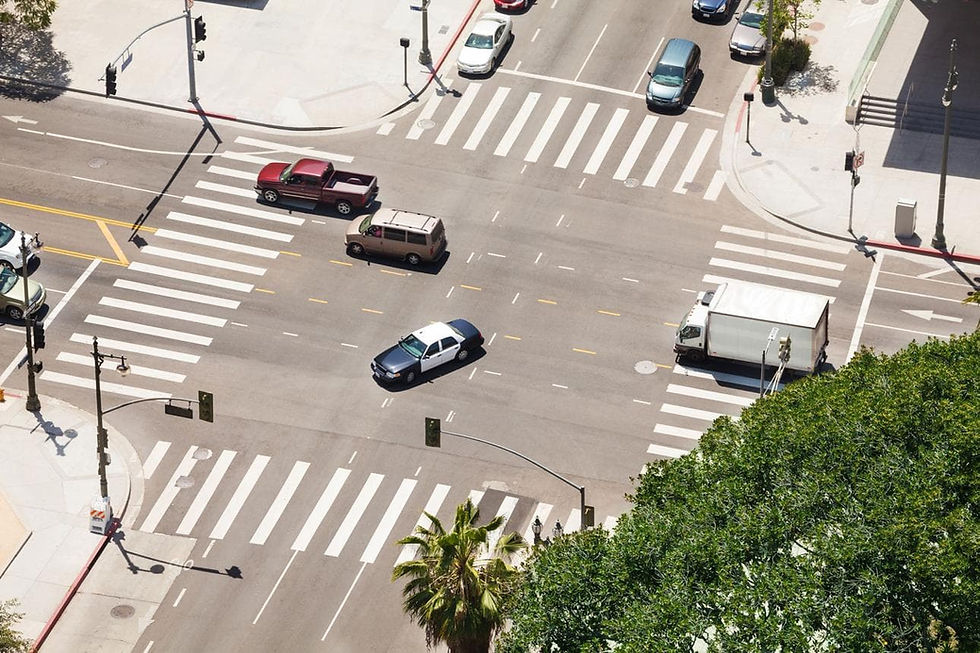
Many serious pedestrian accidents in Markham happen at or near intersections. These cases involve turning vehicles, left turns, right turns on red, drivers trying to beat a light, or drivers focused on other traffic rather than people in the crosswalk.
Pedestrian collisions occur around major Markham roads and corridors such as:
Highway 7
Warden Avenue
Kennedy Road
McCowan Road
Markham Road
16th Avenue
Major Mackenzie Drive East
Steeles Avenue East
Leslie Street
Woodbine Avenue
Bur Oak Avenue
Main Street Unionville
Enterprise Boulevard
Birchmount Road
Markham has a mix of suburban arterial roads, commercial plazas, GO station areas, school zones, residential neighbourhoods, and high-traffic intersections. That matters because pedestrian accident claims are often tied to the physical environment where the crash occurred.
A pedestrian crossing near a plaza on Highway 7 may face a very different risk pattern than someone walking near Main Street Unionville, Cornell, Box Grove, Milliken Mills, Unionville, or a residential school zone.
Pedestrian Accidents in Parking Lots and Plazas
Not every pedestrian accident happens on a roadway. Many pedestrian injuries happen in parking lots, driveways, plaza entrances, gas stations, condo access roads, and commercial areas.
In Markham, this can include collisions near shopping plazas, medical buildings, restaurants, grocery stores, schools, office parks, and transit areas. Drivers may be reversing, turning into parking spaces, rushing through a lot, looking for a store entrance, or failing to check for people walking behind or beside the vehicle.
These cases may require investigation into:
Driver negligence
Surveillance video
Lighting
Signage
Traffic flow inside the parking lot
Sightlines
Snow, ice, or poor maintenance
Whether a property owner or occupier may share responsibility
Pedestrian Accidents Near Transit, Schools, and Residential Areas
Pedestrians are vulnerable near bus stops, schools, community centres, parks, and residential streets. Children, seniors, commuters, and people walking to stores or appointments may be at risk when drivers fail to slow down or pay attention.
In Markham, pedestrian movement is common around areas such as:
Unionville
Cornell
Box Grove
Milliken Mills
Thornhill and Markham border areas
Downtown Markham
Markham Village
Wismer
Berczy Village
Angus Glen
Rouge Fairways
Greensborough
Common Causes of Pedestrian Accidents in Markham
Pedestrian accidents are rarely “just accidents.” They often happen because a driver failed to adjust to the presence of people walking nearby.
Common causes include:
Drivers turning left without checking the crosswalk
Drivers turning right on red while watching vehicle traffic instead of pedestrians
Speeding on arterial roads
Distracted driving
Failing to yield at crosswalks or pedestrian crossings
Failing to stop at stop signs
Driving too fast in parking lots
Poor visibility at night or in bad weather
Impaired or fatigued driving
Aggressive driving
Delivery drivers or rideshare drivers rushing between stops
In serious cases, we look beyond the police report. The report may identify basic facts, but it may not fully explain the collision mechanics, sightlines, signal timing, driver distraction, or long-term effect of the injuries.
Serious Injuries After a Markham Pedestrian Accident
Pedestrian injuries can affect every part of a person’s life. Some clients are unable to work for weeks or months. Others cannot return to the same job at all.
A person who previously worked in a physical job may be unable to stand, walk, lift, climb stairs, or tolerate long shifts. A person in an office or professional role may struggle with headaches, fatigue, memory issues, anxiety, or screen intolerance after a concussion or brain injury.
The legal claim should reflect the real consequences of the injury, including:
Pain and suffering
Loss of enjoyment of life
Past income loss
Future income loss
Reduced earning capacity
Loss of competitive advantage
Medical and rehabilitation expenses
Future care costs
Attendant care needs
Housekeeping and home maintenance losses
Out-of-pocket expenses
Family Law Act claims for close family members
In our experience, pedestrian accident claims often require a careful understanding of both the medical evidence and the person’s actual life before and after the accident. It is not enough to say someone fractured a leg or suffered a concussion. The important question is how the injury changed their function, work, independence, family life, and future.
Accident Benefits for Injured Pedestrians in Ontario
Ontario’s accident benefits system applies even if the injured pedestrian did not own a vehicle. The question is usually which insurance policy responds first.
Depending on the circumstances, accident benefits may be claimed through:
The pedestrian’s own auto insurance policy
A spouse’s or family member’s auto insurance policy
The insurer of the vehicle that struck the pedestrian
The Motor Vehicle Accident Claims Fund, in some uninsured or unidentified cases
Accident benefits may include funding for treatment such as physiotherapy, occupational therapy, psychological treatment, medication, assistive devices, rehabilitation support, and other services. In more serious cases, the available limits may be much higher if the person qualifies for catastrophic impairment.
This part of the claim is important because early treatment can affect recovery. It can also create a medical record showing how the injuries developed over time.
Catastrophic Impairment After a Pedestrian Accident
Some pedestrian accident cases involve catastrophic injuries. This does not always mean the person is completely unable to function, but it does mean the injury meets specific legal criteria under Ontario’s Statutory Accident Benefits Schedule.
A pedestrian may potentially qualify for catastrophic impairment because of:
Paraplegia or tetraplegia
Severe physical impairment
Marked or extreme mental or behavioural impairment
Severe combined physical and psychological impairment
Blindness or serious vision loss
Other serious injuries that meet the SABS criteria
Catastrophic impairment designation can significantly increase access to medical, rehabilitation, and attendant care benefits. It can also become important in the lawsuit because catastrophic injuries often affect long-term care, employment, independence, and family life.
Hit-and-Run Pedestrian Accidents in Markham
Hit-and-run pedestrian accidents are especially stressful because the injured person may not know who struck them or whether insurance is available.
If the driver leaves the scene, there may still be options. A claim may be available through the injured person’s own auto insurance, a household policy, the insurer of another involved vehicle, or the Motor Vehicle Accident Claims Fund depending on the facts.
In a hit-and-run case, early investigation is important. Evidence may include:
Police investigation records
Nearby surveillance video
Dashcam footage
Witness statements
Vehicle debris
911 records
Traffic camera or business camera footage
Photos from the scene
Time matters since surveillance video can be overwritten quickly. If a pedestrian is seriously injured, it is often worth moving quickly to identify possible sources of video evidence.
How Liability Is Proven in a Pedestrian Accident Case
Liability in a pedestrian accident case may be proven through a combination of evidence, including:
Police reports
Witness statements
Scene photographs
Vehicle damage
Dashcam or surveillance footage
Traffic signal timing
Road design and sightline evidence
Accident reconstruction evidence
Medical records
Driver statements
Cell phone or distraction evidence, where available
One issue we often look at is whether the driver had time and visibility to avoid the collision. Another is if the driver was looking in the correct direction before turning or proceeding through an intersection.
In pedestrian cases, details matter. The direction of travel, position in the crosswalk, signal phase, lighting, lane layout, road width, vehicle speed, and point of impact can all affect liability.
What Compensation Can a Markham Pedestrian Accident Lawyer Help Claim?
A pedestrian accident lawsuit may claim several types of compensation, such as:
General damages for pain and suffering
Past income loss
Future income loss
Loss of earning capacity
Loss of competitive advantage
Medical treatment costs
Rehabilitation expenses
Future care costs
Attendant care
Housekeeping and home maintenance losses
Out-of-pocket expenses
Travel expenses for treatment
Family Law Act damages for certain family members
The value of a pedestrian accident claim depends on many factors, including the severity of the injuries, recovery, age, income, employment history, medical evidence, future care needs, credibility, liability, and available insurance.
A case involving a temporary soft tissue injury will be valued very differently from a case involving a traumatic brain injury, surgery, permanent mobility impairment, or inability to return to work.
How Long Do You Have to Start a Pedestrian Accident Claim?
In Ontario, strict deadlines apply after a pedestrian accident. In many cases, the basic limitation period for starting a lawsuit is two years from the date of the accident. However, there may be much shorter notice or application deadlines depending on the type of claim, the parties involved, and whether accident benefits, municipal issues, unidentified drivers, or other complications are present .
For accident benefits, forms and notices may need to be submitted promptly. For claims involving poor road design, municipal maintenance, snow, ice, or other property-related issues, additional notice deadlines may apply.
Because deadlines can be fact-specific, it is best to get legal advice as soon as possible after a serious pedestrian accident.
We Also Represent Injured Cyclists and Motorcyclists in Markham
Pedestrian cases are part of vulnerable road user claims. These are cases where the injured person had little protection compared to the driver of a car, SUV, truck, or commercial vehicle.
We also represent people injured in serious cycling and motorcycle collisions in Markham. If your injury involved a bicycle crash, you may wish to read more about our Markham Bicycle Accident Lawyers page. If your injury involved a motorcycle collision, you may wish to read more about our Markham Motorcycle Accident Lawyers page.
These cases are different from pedestrian claims, but they have similar characteristics like: driver inattention, failure to yield, intersection collisions, unsafe turns, serious orthopedic injuries, brain injuries, and disputes about fault.
How Foster Injury Law Helps After a Markham Pedestrian Accident
After a serious pedestrian accident, our role is to protect the injured person’s legal position while they focus on recovery.
We help by:
Identifying all available insurance coverage
Opening and managing the accident benefits claim
Investigating liability
Obtaining police records and medical records
Preserving witness and video evidence where possible
Dealing with insurers and adjusters
Assessing income loss and future earning capacity
Arranging medical-legal evidence where appropriate
Advancing claims for pain and suffering, future care, and long-term losses
Negotiating settlement
Starting a lawsuit when necessary
We know many injured pedestrians are not just dealing with pain. They may be worried about rent or mortgage payments, missed work, family responsibilities, medical appointments, insurance paperwork, and more.
Speak With a Markham Pedestrian Accident Lawyer
If you or a family member was hit by a vehicle while walking in Markham, you should get legal advice before assuming the insurer’s position is correct.
You have access to accident benefits even if you do not own a car. You also could bring a lawsuit if the driver was fully or partly responsible for the collision.
Foster Injury Law represents pedestrians injured in Markham and throughout Ontario. We can review what happened, explain the available claims, and help determine the next steps.
Contact us today to speak with a Markham pedestrian accident lawyer.
Frequently Asked Questions About Markham Pedestrian Accident Claims
Can I make a claim if I was hit while crossing outside a crosswalk?
Yes, possibly. Crossing outside of a crosswalk may become an issue, but it does not automatically prevent a claim. The driver may still have been speeding, distracted, impaired, or failed to keep proper lookout. Fault can be shared in Ontario.
What if the driver fled the scene?
You still have a claim after a hit-and-run pedestrian accident. It is important to report the accident to police, seek medical attention, and get legal advice quickly so possible insurance sources and evidence can be identified.
Do pedestrian accident claims usually settle?
Many pedestrian accident claims settle, but settlement depends on the seriousness of the injuries, liability, insurance coverage, medical evidence, and the insurer’s position. Serious or disputed cases may require litigation before fair compensation is offered.
Can I sue if I was partly at fault?
Yes. Being partially at fault does not prohibit a lawsuit. It reduces amount of compensation, but the pedestrian still recovers damages if the driver also shares responsibility.
How much is a pedestrian accident claim worth?
The value depends on the injuries, recovery, income loss, future care needs, pain and suffering, liability, and available insurance. A serious fracture, brain injury, permanent impairment, or inability to return to work will usually make the claim more significant.
We also represent pedestrians injured in serious accidents elsewhere in Ontario. Further reading is available at our Richmond Hill Pedestrian Accident Lawyers, Mississauga Pedestrian Accident Lawyers, or Brampton Pedestrian Accident Lawyers pages.